
LGBTQ+ Terms Explained
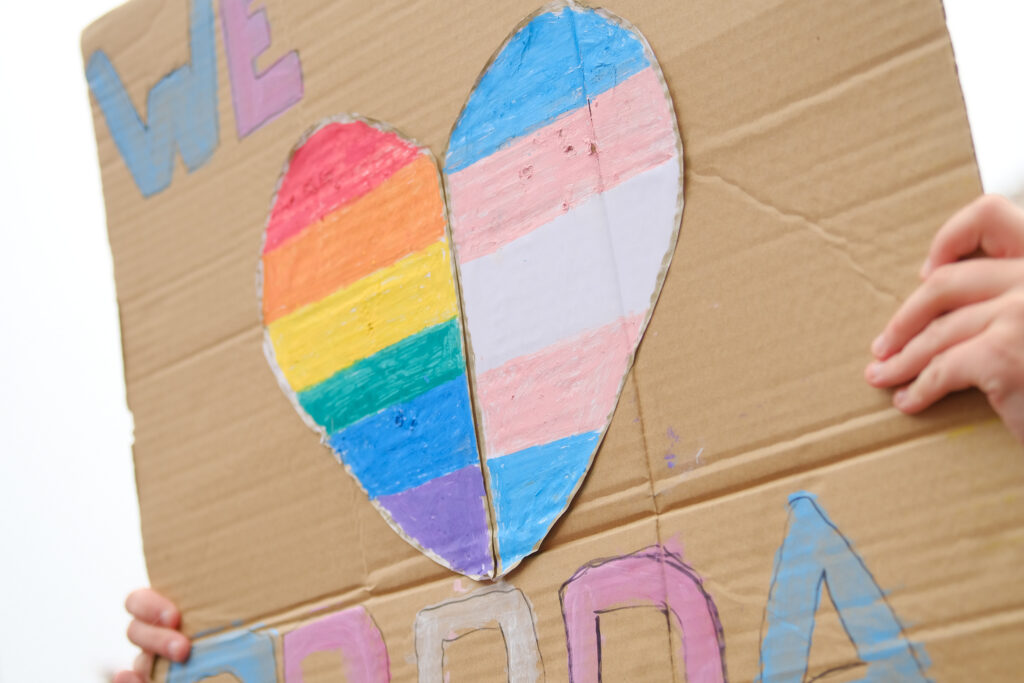
A guide to LGBTQ+ identities and inclusive language
Language is always evolving, especially when it comes to identity. Some people find that certain terms help them express who they are or connect with others. Others might not use labels at all, and that’s completely fine too.
This guide offers a brief overview of common terms used in and around the LGBTQ+ community. It’s not exhaustive, and meanings can vary depending on personal experience and culture.
There’s no single way to define or describe every identity. Words can mean different things to different people, and that’s okay. The most important thing is to approach each person with respect. Our helpline is here to offer guidance, resources, and a safe space to learn more about LGBTQ+ language and identities.
Ace
Umbrella term to describe a group of people who don’t often, or ever, feel sexual or romantic attraction, or who experience it in a variety of way. People under this spectrum might use terms like asexual (ace), aromantic (aro), demisexual, greysexual, or abrosexual, among others. Some people might also combine terms like gay, bisexual, lesbian, straight or queer when they experience attraction.
Asexual (Ace)
Someone who doesn’t experience sexual attraction. Asexuality is different from celibacy or abstinence (choosing not to have sex). On the opposite, someone who does experience sexual attraction is allosexual. Asexual people can still experience romantic attraction and might want to form romantic relationships. They might use terms like homoromantic, heteromantic, or biromantic to describe their attraction.
Grey (sexual or romantic)
Someone who experience sexual or romantic attraction rarely, or occasionally under certain conditions or situations.
Demi (sexual or romantic)
Someone who may only feel sexual or romantic attraction after forming an emotional connection
Abro (sexual or romantic)
Someone whose experience of sexual or romantic attraction changes over time. This can include whether they feel attraction at all, who they are attracted to and how often – these feelings can shift gradually, quickly or without any clear pattern.
Aromantic
Someone who doesn’t experience romantic attraction. Aromantic people can still experience sexual attraction and might want to have sexual relationships or form emotional bonds and friendships, but without the romantic aspects.
Agender
Someone who doesn’t feel they have a gender. They might feel neutral, genderless, or outside the idea of gender completely. Agender is part of the wider non-binary and trans umbrella, though not everyone who is agender will identify that way. It’s not the same as being asexual – agender people can have any sexuality.
Bisexual (Bi)
Someone who is attracted to more than one gender. This might be people of the same gender and other genders. Bi is an umbrella term and people might choose to use terms like bisexual, pansexual (pan) and queer.
Biphobia
Prejudice or discrimination against bi people. Can come from both outside and within the LGBTQ+ community. It can also be internalised, leading to shame or self-doubt.
Cisgender (Cis)
Someone whose gender identity matches the sex they were assigned at birth. On the opposite, someone whose gender identity does not match their sex assigned at birth, might identify as transgender (trans).
Coming out
The process of telling others about your sexual orientation, gender identity, or both. It can happen in different ways and at different times, and some people may come out many times in their lives. Coming out is a personal choice and should always happen on someone’s own terms.
Deadnaming
Using the birth name or former name of a trans or non-binary person without their consent, especially after they’ve changed their name. This can be distressing or disrespectful, as it denies their identity. Always use the name someone has asked you to use.
Gay
Someone who is only attracted to people of the same gender.
Gender affirming
Describes actions, care, or support that helps someone live as the gender they identify with. This can include things like changing names, pronouns, clothing, medical care (like hormones or surgery), or social support. Gender affirming approaches respect and support a person’s gender identity.
Gender identity
Someone’s internal sense of their own gender, which may be different from the sex they were assigned at birth. This can be man, woman, both, neither, or somewhere in between. Gender identity is personal and may not always match societal expectations or labels.
Gender expression
How someone expresses their gender through things like clothing, hairstyle, make-up, voice and behaviour. This can be masculine, feminine, both, neither, or a mix. Gender expression is different from gender identity, as it’s about outward presentation, not internal sense of self.
Gender non-conforming
Someone whose gender expression doesn’t fit traditional or societal expectations of gender. This can involve presenting in ways that are outside of typical gender norms. Both cis and trans people can be gender non-conforming.
Genderqueer
Someone whose gender identity doesn’t fit within traditional gender categories like man or woman. Genderqueer people might feel like their gender is a mix of both, neither, or something else entirely.
Heterosexual (Straight)
Someone who is only attracted to people of a different gender. Most of the time, this is a woman who is attracted to men, or a man who is attracted to women.
Homophobia
Prejudice or discrimination against people who are gay, lesbian, or are perceived to be. It can also be internalised, leading to shame or self-doubt.
Homosexual
A more clinical term for same-gender attraction. It has a history of being used negatively, so many people now prefer terms like gay or lesbian. Though some people still use it for themselves.
Intersex
An umbrella term to describe sex characteristics (e.g. chromosomes, genitals, hormones) that don’t fit typical binary male or female categories. Intersex is not a gender identity – intersex people may identify as men, women, non-binary or something else.
Lesbian
Someone who is mainly attracted to women. Often used by women, but others may also use the term.
LGBTQ+
An acronym for Lesbian, Gay, Bisexual, Transgender (LGBT), and Queer, with the “+” recognising other identities (non-binary, intersex, asexual, pansexual, etc.). We use LGBTQ+ to make clear we include everyone in the community. Another common acronym is LGBTQIA+.
Non-binary
Someone who doesn’t identify strictly as a man or a woman. They may feel like both, neither, or something else. Related terms include genderqueer, genderfluid, agender, and more.
Pansexual (Pan)
Someone who is attracted to people of any gender identity or expression, or regardless of their gender identity or expression. While bisexual also means attraction to more than one gender, pansexual is often used to highlight that gender isn’t a factor in attraction.
Pronouns
Words like he, she, or they used to refer to someone. We use pronouns daily without thinking. Some people also use neo-pronouns like ze, xe, or others. For trans, non-binary, and gender-nonconforming people, using the correct pronouns shows respect for their identity and helps avoid hurtful mistakes.
Polyamory (Poly)
A form of non-monogamy where people have or want romantic or sexual relationships with multiple partners, with everyone’s knowledge and consent. It’s based on openness, trust, and communication.
Queer
The word means different things to different people. For some, it’s an insult, while for others, it’s a reclaimed term used to describe sexual and gender identities outside the heterosexual or cisgender “norms.” Some might use it to reject categories like gay, bisexual, or lesbian, whilst others might use it to embrace fluidity in their identity. It can also be linked to political resistance to mainstream norms.
Questioning
When someone is unsure about or exploring their sexual orientation or gender identity. They may be in the process of figuring out what feels right for them.
QTIPOC
Stands for Queer, Trans, Intersex, and People of Colour. It’s used to describe people who are part of both the LGBTQ+ community and a racial or ethnic minority. The term highlights the unique experiences of people who face both racial and LGBTQ+ marginalisation.
Transgender (Trans)
Umbrella terms for people whose gender identity doesn’t fully match their assigned sex at birth. This can include trans men, trans women, non-binary people, crossdressers, transvestites, transsexual, etc.
FTM / MTF
Terms used by some trans people to describe transitioning from female to male (FTM) or male to female (MTF). These can be medicalised and should only be used with someone’s consent.
AFAB / AMAB
Stands for Assigned Female At Birth and Assigned Male At Birth. These terms refer to people assigned female or male based on physical characteristics at birth, which may not align with their gender identity.
Transsexual
Similar to homosexual, this was used in the past as a more clinical term. Many consider it outdated and prefer terms like transgender and trans. Others might reclaim it like the term queer.
Transvestite / Cross-dresser
Someone who wears clothing traditionally associated with another gender, often for personal expression, comfort, or performance. The term transvestite is considered outdated and can be offensive for some. Cross-dressing does not necessarily relate to sexual orientation or gender identity, and both cis and trans people may cross dress.
Transitioning
The process of changing one’s gender presentation and/or body to match their gender identity. This can be social (name, clothes), medical (hormones, surgery), or both. Can also be known as gender reassignment though this term is outdated for many. Sex change is also discouraged as a term due to misuse in the media, but some people may use it for themselves.
Transphobia
Prejudice or discrimination against trans people or gender non-conformity. This can be whether someone is actually trans or just perceived as. It can be internalised leading to feelings of shame and self-doubt.
Using language thoughtfully and respectfully
This guide is just a starting point.
Everyone’s experience of identity is personal, and the words we use to describe ourselves can change over time. What feels right for one person might not for someone else, we’re all different.
The most important thing is to treat people with respect. If you’re unsure how someone identifies or what language they use, it’s always okay to ask (as long as it’s kind and appropriate). Listening, learning, and using the words someone has chosen for themselves shows care and support.
If you’d like to learn more about LGBTQ+ identities and inclusive language, our helpline is here for you. Whether you have a specific question or just want to better understand how to support someone in your life, we’re happy to talk it through. We can share resources, offer guidance, and help you feel more confident in using language that uplifts and respects LGBTQ+ people in Scotland.
Sign-up for more LGBTQ+ news and never miss what's on for LGBTQ+ people in Scotland