
Mental Health Awareness Week: LGBT+ loneliness support
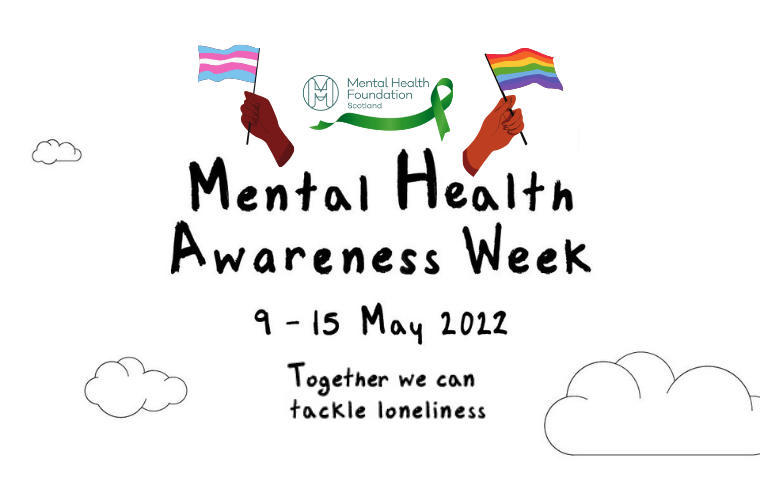
Focusing on LGBT loneliness support
This year, Mental Health Awareness Week in the UK focuses on loneliness, a growing issue for many people, especially within the LGBT+ community. Research by the Mental Health Foundation highlights that LGBT+ individuals are at higher risk of experiencing loneliness. As an organisation dedicated to supporting LGBT+ people in Scotland, we see the impact of loneliness in the LGBT+ community first-hand. If you or someone you know needs LGBT loneliness support, we’re here to help.
Why do LGBT+ people face increased loneliness?
LGBT+ people face several challenges that make loneliness more likely. Many are more likely to be single, childless, living alone, and have less contact with their family. Vulnerable groups, like older LGBT+ people and LGBT+ asylum seekers, are at higher risk of isolation.
Another big issue is minority stress, which is the strain of living with a stigmatised identity. Even though LGBT+ rights have improved in Scotland and worldwide, there is still stigma and discrimination. This leads to feelings of shame, fear, and anxiety, all of which increase the risk of loneliness. The COVID-19 pandemic worsened these feelings for many LGBT+ individuals who had no support network.
How we offer LGBT support in Scotland
At LGBT Health and Wellbeing, we offer a range of services to reduce loneliness and social isolation. We create safe and welcoming spaces for LGBT+ people to come together, build connections, and find support. Our programmes help people get involved in the community, whether as volunteers, activists, or peer group leaders.
In 2021, 85% of people using our services said they felt less lonely after joining our social programmes. 88% felt more connected to their community. Many participants share how valuable it is to make new friends and feel part of a group.
Tracy’s story: finding a community
Tracy, a 56-year-old disabled intersex trans woman, faced increased isolation due to mobility issues following an accident. She joined our Coffee Posse programme, a meetup for LGBT+ people aged 50 and over in Edinburgh and Glasgow. The group provided a supportive environment where Tracy could connect with others.
Tracy says, “At LGBT Health and Wellbeing, there is a real sense of belonging. I’ve made great friends both online and in person. They don’t just see me as a disabled trans woman. They see me. I feel valued here.”
Tracy also attends our Trans Social Lounge and helped start the Trans Friday Night Social Chat, a regular Zoom meetup for trans people to connect in a relaxed, unstructured way.
Thierry’s story: volunteering and giving back
Thierry is a 31-year-old gay man from Cameroon. When he moved to Glasgow in 2019, he had little social support. He joined LGBT Health and Wellbeing to learn about LGBT+ culture and meet others. Thierry felt immediately welcomed at a social event.
He says, “It was rewarding in every way—mentally, physically, and emotionally. I felt like I found a place where I could belong.”
Thierry eventually became a volunteer with LGBT Health and Wellbeing. Now, he works with our Refugee Project, helping LGBT+ asylum seekers feel supported and part of the community.
How to access LGBT support services in Scotland
If you or someone you know is LGBT+ and feeling isolated, LGBT Health and Wellbeing offers a variety of services to help:
- Social Programme: Regular meetups, community groups, and discussions where LGBT+ people can connect.
- LGBT Helpline Scotland: Offering emotional support and guidance. Open Tuesdays and Wednesdays (12-9pm) and Thursdays and Sundays (1-6pm). You can call (0300 123 2523), email (helpline@lgbthealth.org.uk), or use live chat.
- Telefriending: A phone service offering regular calls to older LGBT+ people (aged 50 and over) who are isolated.
- Mental Health Support: We offer counselling, individual support sessions (by phone, email, or online), and group workshops to help with mental health and wellbeing.
- Specialist Services: We provide tailored support for trans people, older LGBT+ people, and LGBT+ asylum seekers and refugees.