
World Refugee Day: what’s it like to be an LGBTQ+ refugee in Scotland?
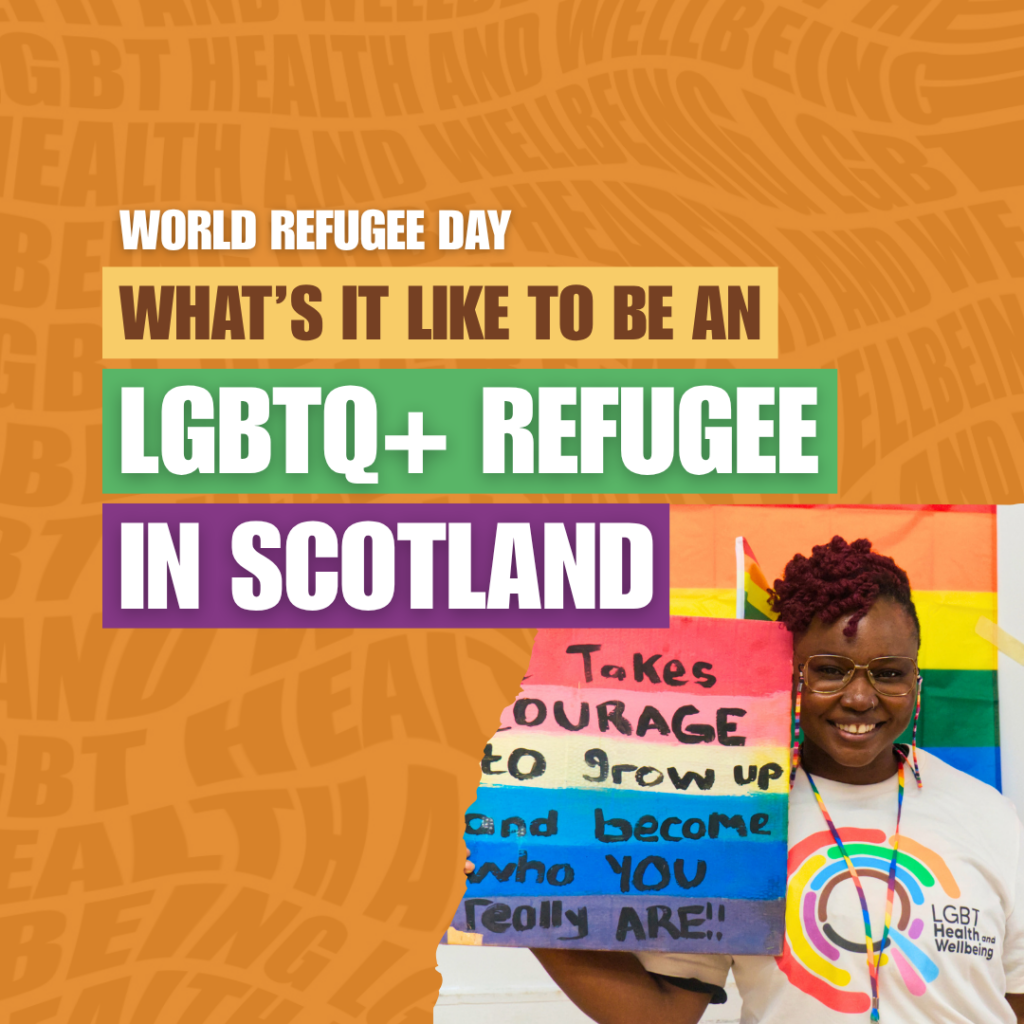
Today is World Refugee Day. It falls during Refugee Week – a time to celebrate the strength and contributions of people who’ve been forced to flee their homes. This year’s theme, Community is a Superpower, reminds us how powerful it is to feel connected and welcome.
But what is life like for LGBTQ+ New Scots (refugees and asylum seekers) now living in Scotland?
In this blog, we explore the unique challenges LGBTQ+ refugees face, from discrimination and unsafe housing, to lack of access and meaningful support. We also highlight the power of community, peer support, and the role of organisations like LGBT Health and Wellbeing in helping people feel safe, seen and supported.
Living at the intersections
Refugees leave their countries because of war, violence and/or persecution. Some flee specifically because of the danger they face due to their sexual orientation or gender identity. Others may be caught in geopolitical conflict, but are also LGBTQ+.
When they arrive in the UK, they enter the asylum system. Many describe it as dehumanising and unnecessarily cruel. On top of that, wider public attitudes towards refugees can make people feel unwelcome and stigmatised.
This means LGBTQ+ refugees often face discrimination on two fronts – both as LGBTQ+ people and as refugees or asylum seekers.
Accommodation challenges
While waiting for a decision from the Home Office about remaining in the UK, people who don’t have anywhere to stay are placed in temporary accommodation. This might be a single person accommodation, small or large houses of multiple occupancy, or hotels.
Many LGBTQ+ refugees have reported problems with their housing. Some face homophobic and transphobic abuse. Others live in buildings that are unsuitable – like flats without lifts for people with mobility issues, broken beds or no heating. Some say they didn’t feel safe being open about who they are in shared or hotel settings, for fear of discrimination or violence from other residents.
At present, there is no LGBTQ+ specific asylum accommodation in Scotland.
The asylum process: what’s missing?
When someone’s asylum claim is accepted, they get practical advice – like how to open a bank account, look for work, and register with a GP.
But LGBTQ+ refugees told us that they weren’t given any information about LGBTQ+ services. The Scottish Government’s Welcome Pack doesn’t include these details, so people are left to search online or rely on word-of-mouth.
Why community matters
It’s vital for LGBTQ+ refugees to connect with others who understand both their identity and their experience of seeking asylum.
“I want to find someone to help me who is also LGBTQ+. Someone who understands me.”
Specialist services can be a lifeline – offering not just emotional support, but safe spaces, information and practical help.
Many refugees told us they only found out about LGBT Health and Wellbeing’s Refugee Project later in their journey, and wish they’d known about it sooner.
Volunteering, doing drag, joining inclusive faith groups, attending social events and exercising were all named as ways LGBTQ+ refugees found strength and connection. These helped people look after their mental and physical health, and offered purpose during long periods of uncertainty.
But there are barriers. Travel costs and gym fees can make it hard to get involved. Some people said that just a monthly gym membership could eat up a quarter of their monthly budget. A bus pass in Glasgow, for example, costs over £77 a month.
While waiting for a decision, asylum seekers aren’t allowed to work. They receive just £49.18 per week, or £9.95 if food is provided with their accommodation.
How we support LGBTQ+ New Scots
LGBT Health and Wellbeing offers free support to LGBTQ+ people aged 16 and over in Scotland – including those going through the asylum process or with refugee status.
We provide one-to-one support, social groups and practical advice. Our services help people feel less alone, understand their rights, and connect with others who share similar experiences.
“The support I’ve received from LGBT Health and Wellbeing has helped me look after my mental health, feel less isolated and better understand the asylum system. It’s helped me cope – and even support others.”
We offer a free, confidential helpline via phone (0800 464 7000), live chat (lgbthealth.org.uk), and email (helpline@lgbthealth.org.uk).
It’s open four days a week – Tuesdays, Wednesdays and Thursdays from 12–9pm, and Sundays from 1–6pm.
The helpline is run by trained volunteers, some of whom speak other languages. If someone isn’t confident speaking English, we’ll do our best to support them.
Everyone’s journey is different, but having a safe space and someone who understands can be life-changing. We’re here to make sure LGBTQ+ New Scots are supported — and not left behind.